aInstitute of Experimental Physics, Slovak Academy of Sciences, Kosice, Slovakia bInstitute of Hydrology, Slovak Academy of Sciences, Bratislava, Slovakia cHelmholtz-Zentrum Geesthacht, Zentrum für Material und Küstenforschung, Geesthacht, Germany dJoint Institute of Nuclear Research, Dubna, Moscow region, Russian Federation eT.G. Shevchenko Kiev National University, Kiev, Ukraine fInstitute for Solid State Physics and Optics, Wigner Research Centre for Physics, Hungarian Academy of Sciences, Budapest, Hungary gDepartment of Chemistry, Southwest University of Science and Technology, Mianyang, P.R. China
Аннотация:
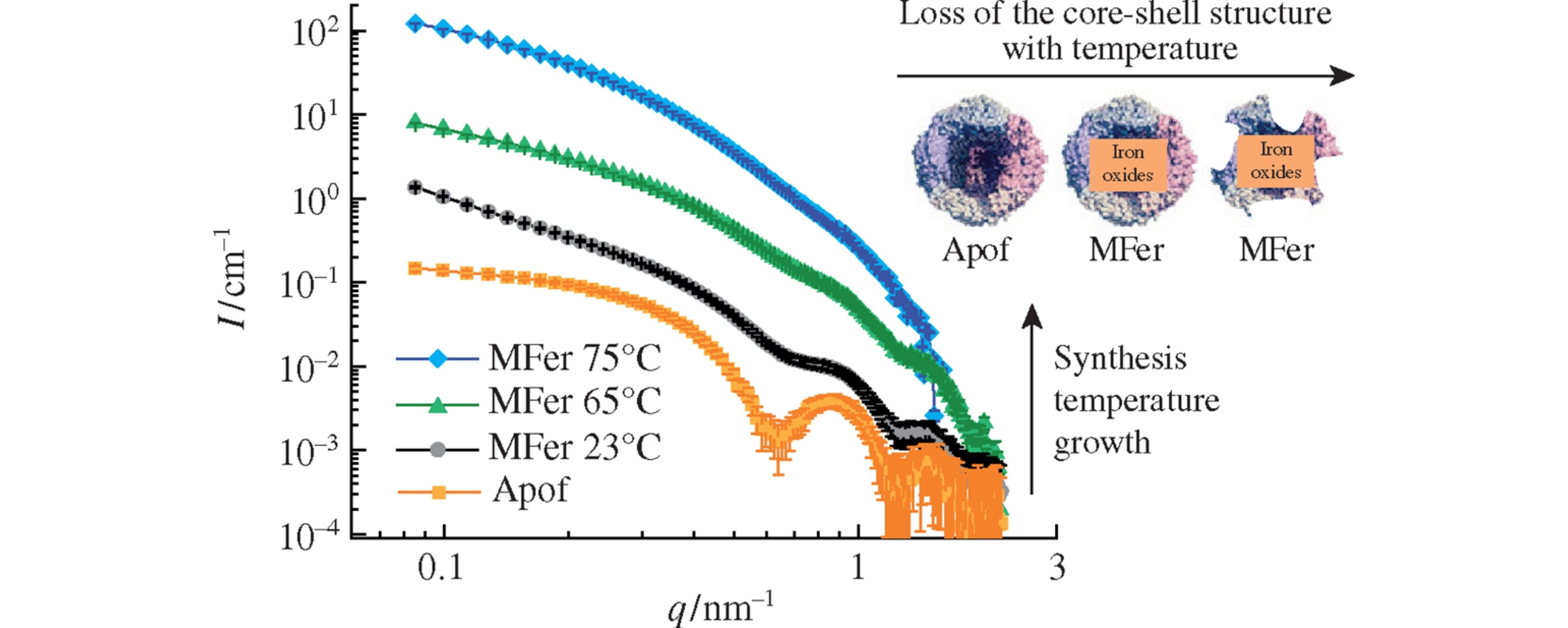
The variation of synthesis temperature made it possible to produce artificial ferritins possessing different structural and magnetic properties, size distribution, and colloidal stability. The effect of synthesis temperature on the core structure and stability of protein shell was investigated using small-angle neutron scattering, small-angle X-ray scattering, SQUID magnetometry, dynamic light scattering, and zeta potential measurements. The optimal temperature was established for the synthesis of artificial ferritin suitable for biomedical imaging applications at ∼60°C, which is close to the protein denaturation temperature.



 Полный текст:
PDF файл (590 kB)
Полный текст:
PDF файл (590 kB)